
At the Zoo

Just returned from a late-summer photography field trip organized by the Duxbury Camera Club, this time to the Franklin Park Zoo in Boston.
It was a warm September day and initially there wasn’t much happening. For the animals, mid-afternoon was a time for sleeping and shade-seeking. I waited them out by spending time with the penguins. Eventually we began to see some action, although the lion chose to stay in dreamland. Still majestic, even in sleep.
I brought along some wide, fast lenses, assuming close proximity. That worked for the curious penguins but not for any of the other subjects, who kept their distance. Luckily, I also threw in a Sigma 135, f1.8 which, paired with the SL3, did the trick, both to blur out any enclosure wire and to isolate the subjects.
Here are my shots.
Bridge

I usually shoot full frame with a 2:3 aspect ratio. When I crop, I use 2:3 as well. Pretty much everything I present is in that 2:3 aspect ratio. I know many photographers crop to the subject and use whatever aspect ratio suits the situation. I respect that choice. But I find that working within a fixed aspect ratio provides a constraint that makes me think harder about composition in general. That’s just me.
But… like anything, there are exceptions: panoramas, for instance. I occasionally shoot images that I intend to stitch into panoramas. In those cases I crop for the subject.
The above photo of the Powder Point Bridge in Duxbury was not stitched. It was a single shot. But in this case I decided that the subject matter called for a pano crop. I guess rules are made to be broken.
The bridge is a local landmark and has been photographed many times, including often by my fellow Duxbury Camera Club members. It’s been shot at sunrise, sunset, during auroras and in all types of weather. There are some really beautiful photos of the bridge out there. I decided it was my turn to take a swing at it and I thought I would do something a little different, maybe something a little more austere. And this is my shot.
Taken from Pine Point Pl. at 220mm, using a Leica SL3 and Sigma 150-600.
Roundstone

Just back from a quick trip to Roundstone to visit friends and family. Roundstone is a small fishing village on the west coast of Ireland, in Connemara. I brought one camera and three lenses, all of which were used. The camera was a Leica M-EV1. The lenses were a Voiglander 50mm f1.5, a 35mm Summilux and a 28mm Elmarit.
We only stayed a few days and there wasn’t much time for shooting but I did manage to get up early and get some walking and photography in. Lots of boats. The weather was typical Ireland; rain, mist and cool temperatures. But I did have some luck around sunrise with breaks in the clouds— and even a rainbow! Here are my shots.
Farm Shoot

This month’s DCC photography field trip was to the historic O’Neil Farm in Duxbury, Ma. Lots of interesting animals, none of whom were inclined to cooperate with focusing or framing. Love those goats, though. Real personalities. They remind me of some of the old men around town. Here are my shots at the farm.
Plimoth Patuxet

Another field trip by the Duxbury Camera Club, this time to the preserved community and museum at Patuxet in Plymouth Ma. It was a warm early spring day with harsh sunlight, so not the best conditions for a photo shoot. But we did our best. Here are some of mine.
Bogged
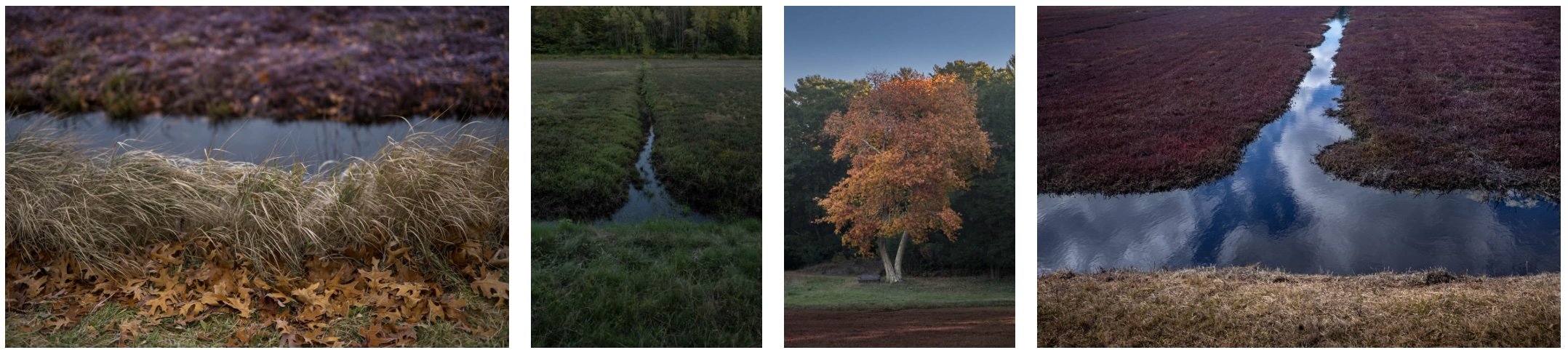
Southeastern Massachusetts is cranberry central. There are dozens of working bogs in the area and I spend a lot of time walking the dog on the paths around them. More often than not I bring a camera.
Here’s a small collection of bog shots taken over the course of this year, including some this week. I always enjoy the colors and how they change across the seasons, and even the time of day.
Under the Golden Dome
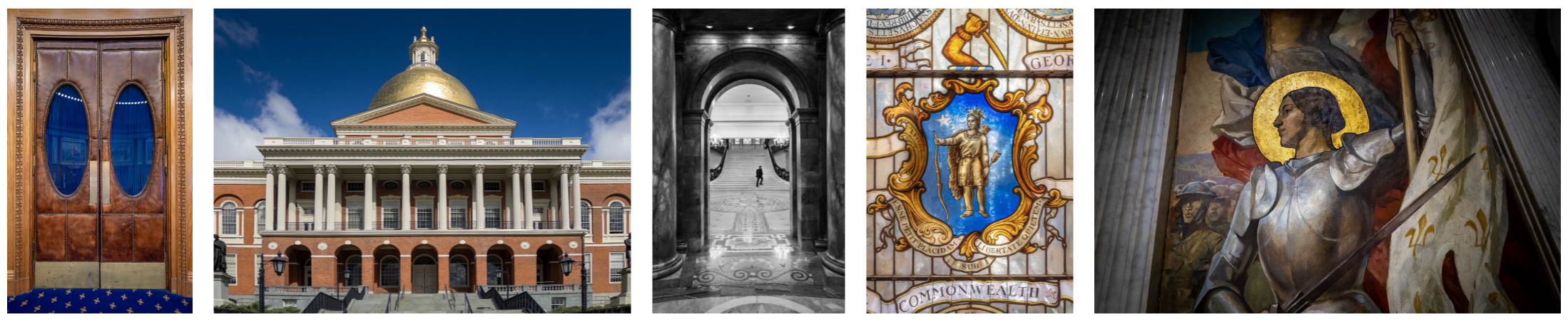
Our latest foray with the Duxbury Camera Club was to shoot up on Beacon Hill. We spent an afternoon in the Massachusetts State House. Here’s a gallery of some of my shots.
Staff were very open to our group shooting away and one of the security folks even opened up the House Chamber for us. I used the Leica SL3 with a Sigma 35 f1.2, as well as the Viltrox 16mm f1.8. The Sigma is a little big and heavy but both lenses performed well with the interior shots.
Snow, snow and more snow.

It’s been quite a winter here in coastal Massachusetts. Very cold and lots and lots of snow. Shoveling was tough and it was no fun going days without power. But all that snow was perfect for black & white photography.
It seemed like a new fresh coat would arrive each week, keeping the ground cover clean and camera-ready. And then, as February ended, it was all gone in a single week of warm days and now all we have left to remind us of the snow are the photos.
Museum of Industry

I haven’t posted anything. for a while. But now I have a few photos to post. This group of images is from a Duxbury Camera Club field trip to the Charles River Museum of Industry and Innovation in Waltham, MA.
It’s a cool little place. I tried out my new Viltrox 16mm F1.8 on the SL3. (It’s a really sharp and fast wide-angle, with very little distortion. It performs well with the big sensor on the SL3 and gives the Leica lenses a run for their money on image quality.)
Shine On

I had not planned to shoot the Harvest Moon, but I was out walking the dog near the North River and just before heading home I remembered that the Harvest moonrise would be tonight — and in only a few minutes. I had the SL3 with me and a Sigma 20-200mm that I had been testing, so I decided, on the fly, to head up to the North River bridge and see if I could see the moon come up. And there it was.
As mentioned, it wasn’t a planned shoot and I was barely able to check my settings as I rushed around to catch the moon near the horizon from a number of different perspectives. I caught it over the lobster shack and out over the spit. A big thanks to the woman who pointed out the Great Blue Heron on the post behind the marina.
Also to Uma, who waited patiently for me in the car.